Brazil
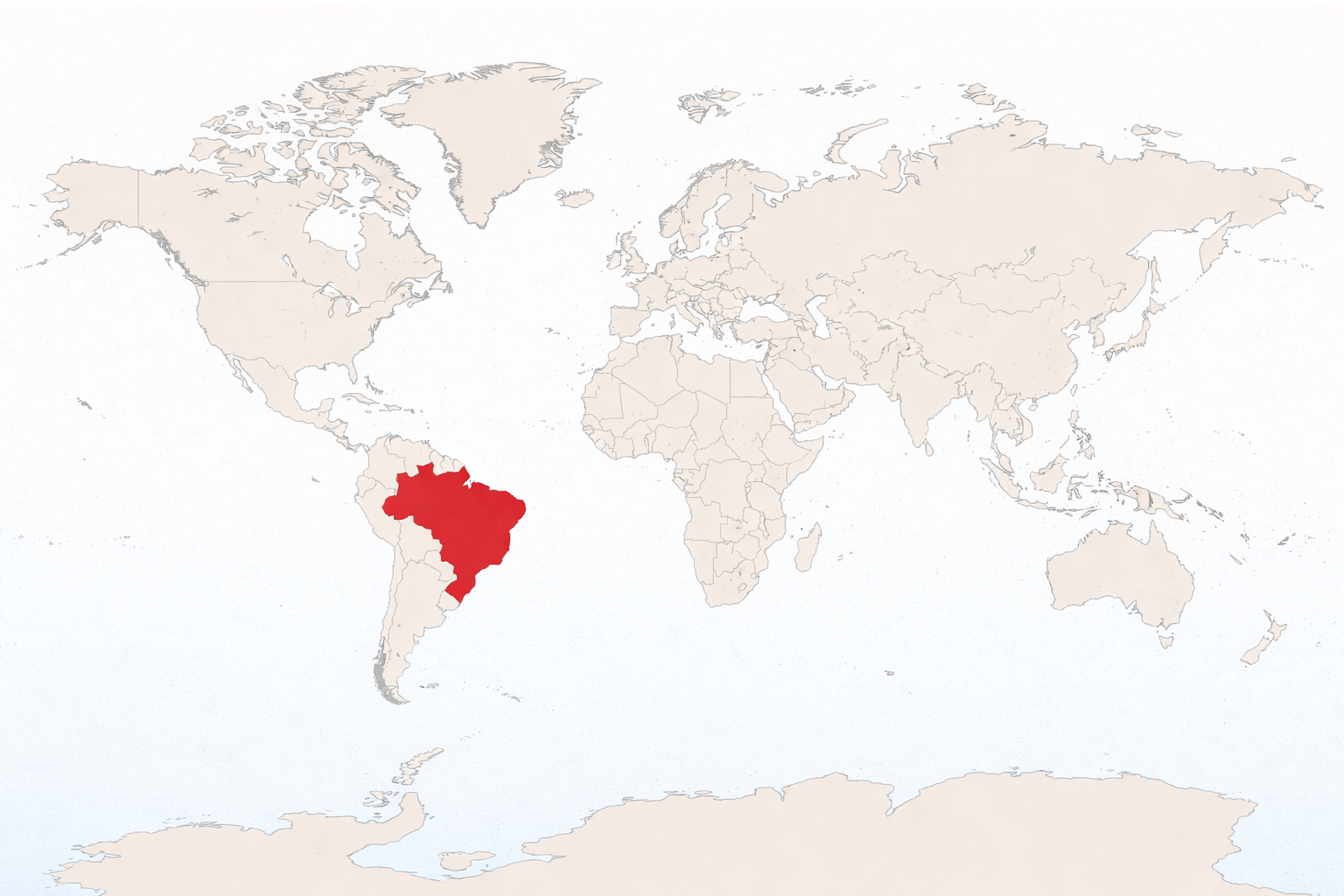
Brazil is a nation forged in empire and inequality: from Portuguese colonization and plantation slavery to imperial independence, republican experiment, dictatorship, and democratic return, each transformation reshaped a continental society built on land, migration, and cultural fusion, leaving a global agricultural and environmental power still negotiating race, development, and institutional trust across an immense geographic canvas.
Capital
Brasília
Population
203 Million
Currency
BRL
Language
Portuguese
Modern Snapshot
Strategic industries
Agriculture (soy, beef), mining, energy (oil & ethanol), steel, aerospace
Demographic trend
Large, youthful population with growing middle class; persistent inequality remains a structural challenge
Security posture
Non-interventionist tradition; rising BRICS voice; severe domestic pressure from organized crime and urban violence
Why Brazil matters now
Strategic reasons this country is essential reading today.
Brazil is pivotal to global climate outcomes: Amazon deforestation, biodiversity, and carbon policy have worldwide impact.
As an agricultural and commodities powerhouse, Brazil strongly influences food prices, energy markets, and global inflation dynamics.
Its democracy is a bellwether for institutional resilience in polarized, unequal societies.
Brazil anchors South American geopolitics and plays an outsized role in BRICS and Global South diplomacy.
Regional & Global Relationships
Who shapes Brazil — and who Brazil shapes
Timeline by period
Key moments mapped to Strabo's global eras.
Indigenous Worlds, Portugal & the Atlantic Slave System
Prehistory – 1822Empire, Slavery & Nation-Building
1822 – 1889Republic, Oligarchy & Vargas
1889 – 1945Military Dictatorship & Development
1964 – 1985New Republic, Inequality & the Amazon Era
1985 – PresentStart Here
Pick a window that fits your schedule. You can always go deeper later.
This reading path is coming soon. For now, check out the shorter starter picks.

Go deeper
When you want depth, follow a theme.













Some book links may earn Strabo a small commission at no extra cost to you.