
China
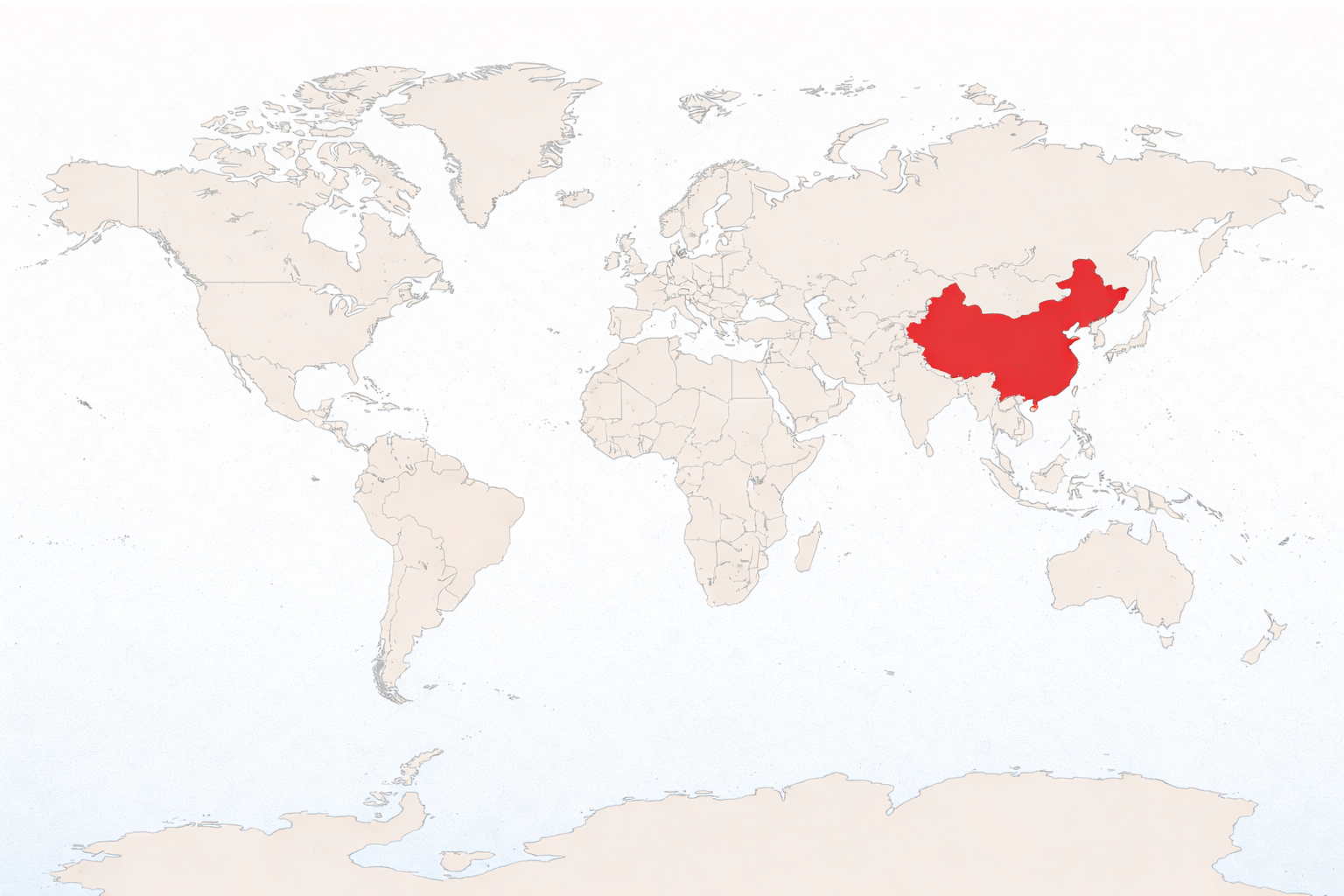
China is a civilization forged in unity and rupture: from imperial dynasties that built enduring bureaucratic and cultural foundations to a century of invasion, revolution, and civil war, and then the rise of a centralized party-state that fused socialism with market reform, each transformation reshaped the nation without severing its deep continuity, leaving a global industrial and technological power still negotiating authority, ideology, and its place in the world.
Capital
Beijing
Population
1.41 Billion
Currency
CNY
Language
Mandarin Chinese
Modern Snapshot
Strategic industries
EVs, batteries, solar, semiconductors, shipbuilding, advanced manufacturing
Demographic trend
Rapidly aging society; shrinking workforce; one-child policy legacy reshaping long-term growth prospects
Security posture
Nuclear-armed great power; contested South China Sea; Taiwan reunification as stated strategic priority
Why China matters now
Strategic reasons this country is essential reading today.
China’s economy is deeply integrated into global manufacturing and supply chains, so its policy shifts ripple worldwide.
Its industrial strategy in EVs, batteries, solar, and advanced manufacturing is reshaping global competition.
U.S.–China rivalry is increasingly centered on technology, trade, and security, with consequences for allies and emerging markets.
Domestic priorities—growth, demographics, property, and social stability—are driving major policy decisions.
Regional & Global Relationships
Who shapes China — and who China shapes
Timeline by period
Key moments mapped to Strabo's global eras.
Origins & Early Empires (Qin / Han)
c. 221 BCE – 220 CECosmopolitan Empires (Sui / Tang / Song)
581 – 1279Ming–Qing China & the Early Modern World
1368 – 1911Republic, Invasion & Revolution
1911 – 1949PRC: Mao → Reform → Superpower
1949 – PresentStart Here
Pick a window that fits your schedule. You can always go deeper later.
This reading path is coming soon. For now, check out the shorter starter picks.

Starter Pick
The Party: The Secret World of China’s Communist Rulers
Richard McGregor

Go deeper
When you want depth, follow a theme.







Some book links may earn Strabo a small commission at no extra cost to you.