
Italy
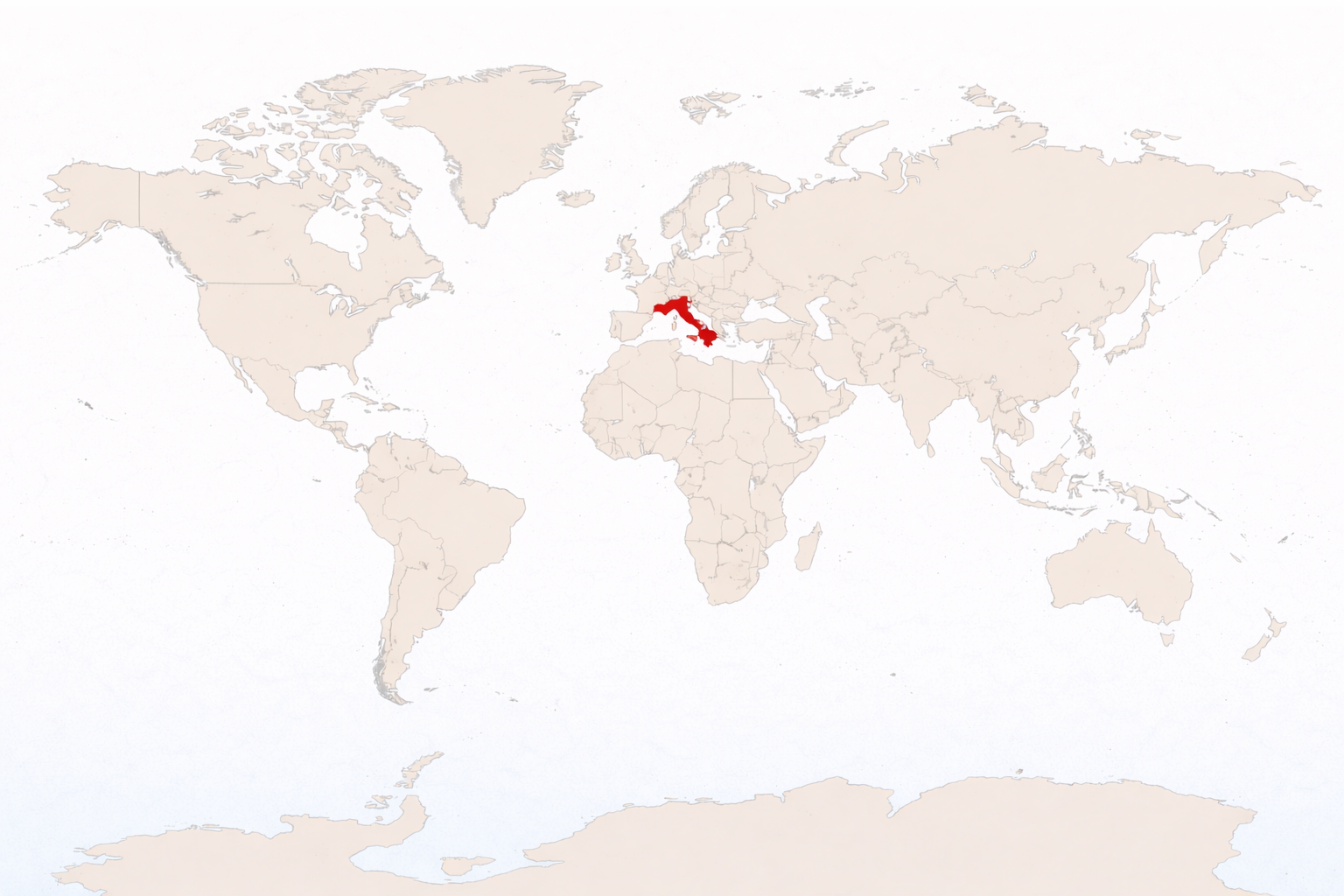
Italy is a civilization layered in one peninsula, where the legacy of Rome, the creative ferment of the Renaissance, the authority of the papacy, and the rivalries of mercantile city-states shaped Western ideas of empire, law, capitalism, art, and faith, leaving a modern nation still defined by powerful regional identities and an outsized cultural influence.
Capital
Rome
Population
59 Million
Currency
EUR
Language
Italian
Modern Snapshot
Strategic industries
Tourism, fashion and luxury goods, precision machinery, pharmaceuticals, automotive, agri-food exports
Demographic trend
Among Europe's fastest-aging populations; heavy dependence on immigration to sustain the labor force; persistent north-south economic divide
Security posture
NATO member and Mediterranean security actor; historically cautious on defense spending; political instability limits long-term strategic coherence
Why Italy matters now
Strategic reasons this country is essential reading today.
Italy is foundational to Western political, legal, and cultural traditions—from Roman law to Renaissance humanism.
Its city-based history explains modern regionalism, identity politics, and the limits of centralized power.
Italy’s experience with fascism, resistance, and postwar democracy offers lessons for modern politics.
As a cultural superpower, Italy continues to shape global tastes in art, architecture, cuisine, and design.
Regional & Global Relationships
Who shapes Italy — and who Italy shapes
Timeline by period
Key moments mapped to Strabo's global eras.
Rome and Empire
753 BCE – 476 CEChurch, Kingdoms, and City-States
500 – 1300The Italian Renaissance
1300 – 1550Unification and Nationhood
1815 – 1914Fascism, Republic, and Modern Italy
1914 – PresentStart Here
Pick a window that fits your schedule. You can always go deeper later.
This reading path is coming soon. For now, check out the shorter starter picks.


Go deeper
When you want depth, follow a theme.


Some book links may earn Strabo a small commission at no extra cost to you.