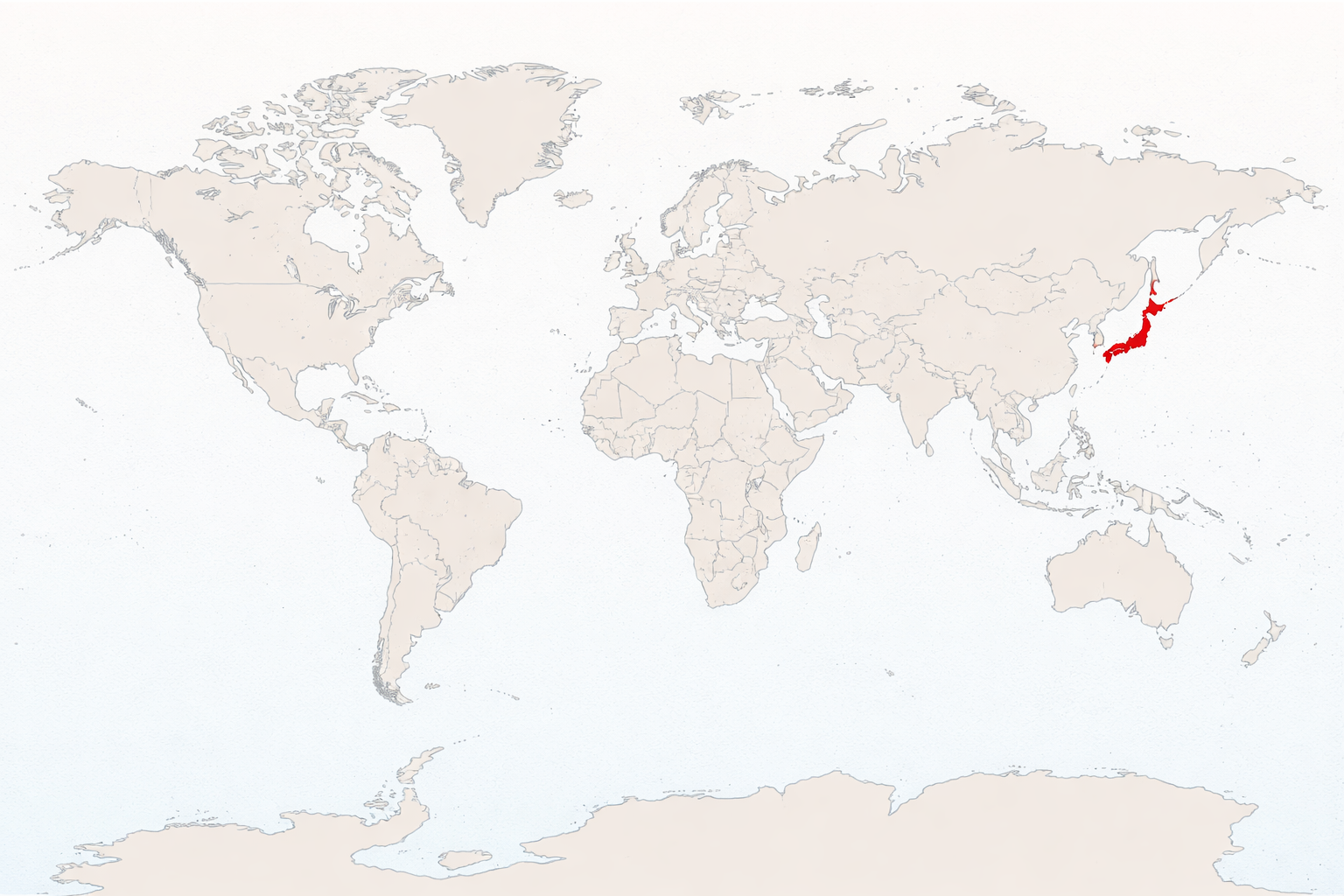

Japan
Japan is a civilization of continuity and reinvention: an island society that absorbed outside influences—Chinese writing and bureaucracy, Buddhism, European technology, American-style modernity—then reshaped them into something distinctly its own.
Capital
Tokyo
Population
123 Million
Currency
JPY
Language
Japanese
Modern Snapshot
Strategic industries
Semiconductors, autos, robotics, precision manufacturing
Demographic trend
Aging and shrinking population
Security posture
Pacifist constitution evolving amid Indo-Pacific threats
Why Japan matters now
Strategic reasons this country is essential reading today.
Japan sits at the center of Indo-Pacific security, balancing constitutional pacifism with rising regional threats and alliance commitments.
It is a front-runner case study for aging societies—healthcare, pensions, labor shortages, and the politics of demographic decline.
Japan remains a critical node in advanced manufacturing and supply chains (semiconductors, robotics, precision components).
Its approach to industrial policy and corporate governance reforms is shaping how “advanced economies” adapt after long slow-growth periods.
Regional & Global Relationships
Who shapes Japan — and who Japan shapes
Timeline by period
Key moments mapped to Strabo's global eras.
Jōmon, Yayoi & Deep Origins
c. 14,000 BCE – 300 CECourt Culture & Classical Japan
710 – 1185Samurai Rule & Medieval Japan
1185 – 1600Edo / Tokugawa Order
1600 – 1868
Edo Culture: Daily Life and Diversions in Urban Japan, 1600–1868
James L. McClain, John M. Merriman, Kaoru Ugawa (eds.)
Meiji Modernization & Empire
1868 – 1945Defeat, Occupation & Postwar Japan
1945 – PresentStart Here
Pick a window that fits your schedule. You can always go deeper later.
This reading path is coming soon. For now, check out the shorter starter picks.


Starter Pick
Embracing Defeat: Japan in the Wake of World War II
John W. Dower
~16 hrs
Go deeper
When you want depth, follow a theme.


Some book links may earn Strabo a small commission at no extra cost to you.