Strabo
Strabo
Europe · Countries / Russia

Russia

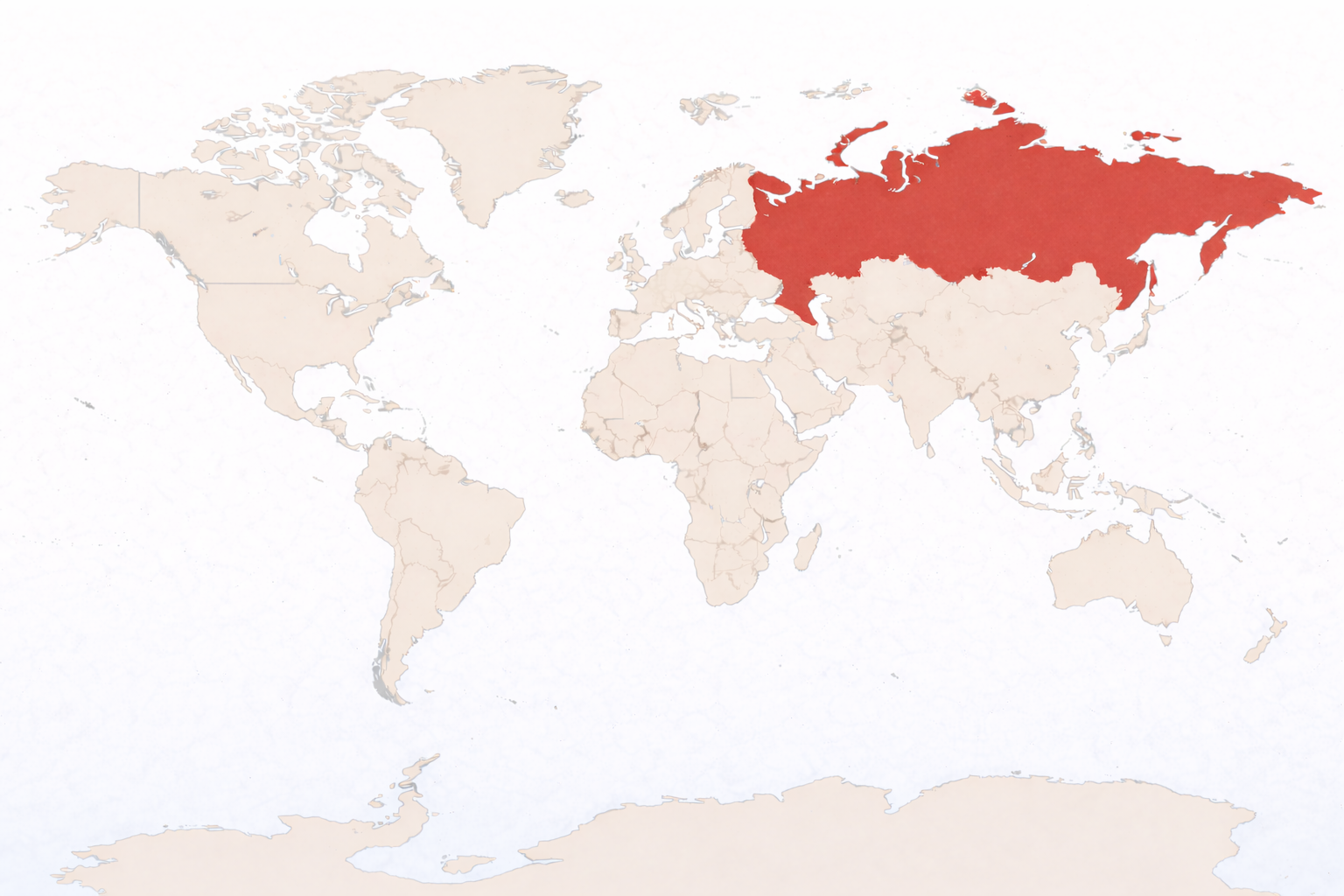
Russia is a vast continental power shaped by geography and insecurity, where a medieval Slavic principality expanded into empire, hardened into a revolutionary superstate, and reemerged as a post-Soviet federation, revealing recurring patterns of centralized authority, state-led modernization, security dominance, and an unresolved debate over its place between Europe and Eurasia.

Capital Moscow
Population 146 Million
Currency RUB
Language Russian
Modern Snapshot
Strategic industries Oil and gas (dominant), military-industrial complex, metals and mining, grain export, nuclear technology and arms sales
Demographic trend Slowly shrinking population; significant emigration of educated professionals since 2022; military casualties from the Ukraine war adding additional demographic pressure to an already strained trajectory
Security posture World's largest nuclear arsenal; permanent UN Security Council seat; Ukraine war as the defining strategic commitment; Arctic ambitions; intelligence services (FSB/SVR) retain extensive global reach
Books for era
Early-modern-transformation

Book

A Short History of Russia

Mark Galeotti

A concise, readable introduction to Russia’s arc from early statehood through revolution and modern politics — ideal for first-time readers.

Book

The Romanovs: 1613-1918

Simon Sebag Montefiore

A cinematic, highly readable dynasty history that explains how Russia became an empire—and why its rulers feared collapse.

Why Russia matters now

Strategic reasons this country is essential reading today.

Russia’s war against Ukraine and the sanctions regime have reshaped European security and global energy flows.

Russia remains a central nuclear power, making escalation risk and strategic stability enduring global concerns.

The state’s security institutions and information controls strongly shape domestic politics and foreign policy.

Russia’s geography and borderlands keep it structurally relevant to Eurasian trade routes, migration, and conflict dynamics.

Regional & Global Relationships

Who shapes Russia — and who Russia shapes

China
Partner

The February 2022 'no limits' partnership has deepened since the Ukraine invasion; China buys Russian energy at discount, provides dual-use goods, and offers diplomatic cover at the UN—but the relationship is asymmetric, with Russia increasingly the junior partner.

Ukraine
Tension

Russia's full-scale invasion in February 2022 represents the largest European land war since 1945; it has transformed NATO cohesion, European energy markets, and Russia's global standing in ways that define this generation of European and global politics.

European Union
Tension

Decades of energy interdependence collapsed after the 2022 invasion; sanctions, asset seizures, and the destruction of Nord Stream have left a relationship of sustained confrontation that neither side has any near-term path to repair.

United States
Tension

Nuclear deterrence, NATO expansion, and proxy competition in Ukraine make the US-Russia relationship the defining bilateral confrontation in contemporary great-power politics; arms control frameworks have eroded and mutual trust is at historic lows.

Unlock the timeline

Unlock Strabo Plus

Track your reading, unlock timelines, and build your journey.

Start Here

Pick a window that fits your schedule. You can always go deeper later.

A Short History of Russia

Starter Pick

A Short History of Russia

Mark Galeotti

Go deeper

Unlock Strabo Plus

Track your reading, unlock timelines, and build your journey.

Some book links may earn Strabo a small commission at no extra cost to you.

Track your reading journey. Start Your Journey