Turkey
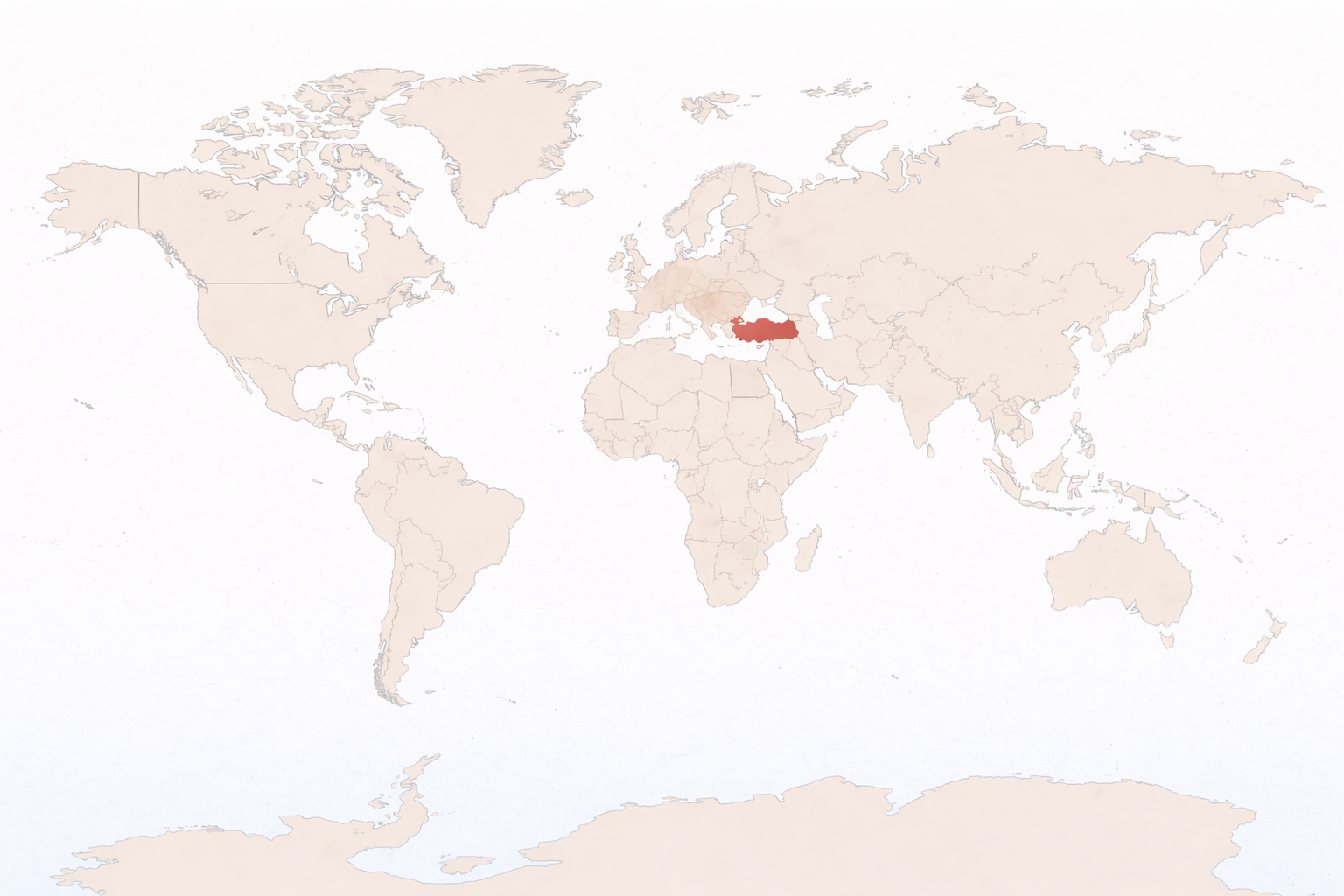
Turkey is a civilizational crossroads where Anatolian antiquity, Byzantine Christianity, Ottoman imperial rule, and Atatürk’s secular republic converge, producing a modern state that continually negotiates between Europe and Asia, Islam and secularism, democracy and authority, and the enduring legacies of empire and nation-building.
Capital
Ankara
Population
85 Million
Currency
TRY
Language
Turkish
Modern Snapshot
Strategic industries
Defense manufacturing (drones, armored vehicles), construction, textiles, tourism, agriculture, automotive assembly
Demographic trend
Young, urbanizing population—a contrast with aging Europe; significant rural-to-urban migration and a large, politically active diaspora in Germany and Western Europe
Security posture
NATO's second-largest military; controls the Bosphorus under the Montreux Convention; active military presence in Syria, Libya, and the Caucasus; Bosphorus leverage amplified by the Ukraine war
Why Turkey matters now
Strategic reasons this country is essential reading today.
Turkey remains a geopolitical hinge—between NATO and Russia, Europe and the Middle East, secularism and political Islam.
Debates over nationalism, democracy, and authoritarianism in Turkey mirror global tensions playing out elsewhere.
The Ottoman legacy continues to shape the Balkans, the Middle East, and North Africa in visible ways.
Turkey’s control of key migration routes and waterways makes it central to European and global stability.
Regional & Global Relationships
Who shapes Turkey — and who Turkey shapes
Timeline by period
Key moments mapped to Strabo's global eras.
Ancient Anatolia and Byzantium
3000 BCE – 1071 CEThe Rise of the Ottoman Empire
1300 – 1566Empire at Its Height
1566 – 1700Decline, Reform, and Collapse
1700 – 1922The Turkish Republic
1923 – PresentStart Here
Pick a window that fits your schedule. You can always go deeper later.
This reading path is coming soon. For now, check out the shorter starter picks.


Go deeper
When you want depth, follow a theme.




Some book links may earn Strabo a small commission at no extra cost to you.